

By Aksana Tupalskaya | August 17, 2026
Quick Answer
Should an out-of-state owner do a 1031 exchange or just sell an Oahu property outright?
A 1031 exchange lets you defer capital gains tax by rolling sale proceeds into another investment property within strict IRS timelines, while selling outright means paying capital gains now and keeping full control of the cash. HARPTA withholding of 7.25% on the gross sale price applies at closing either way, though an exchange can reduce or eliminate the withholding with the right advance paperwork. The right choice depends on whether you want to keep building real estate wealth or would rather have liquid proceeds, and it is a decision that needs a CPA, not just an agent.
Selling Outright vs. a 1031 Exchange: What Changes
| What You’re Weighing | Sell Outright | 1031 Exchange |
|---|---|---|
| Capital gains tax | Paid at sale, based on your gain and holding period | Deferred, not eliminated, as long as exchange rules are followed |
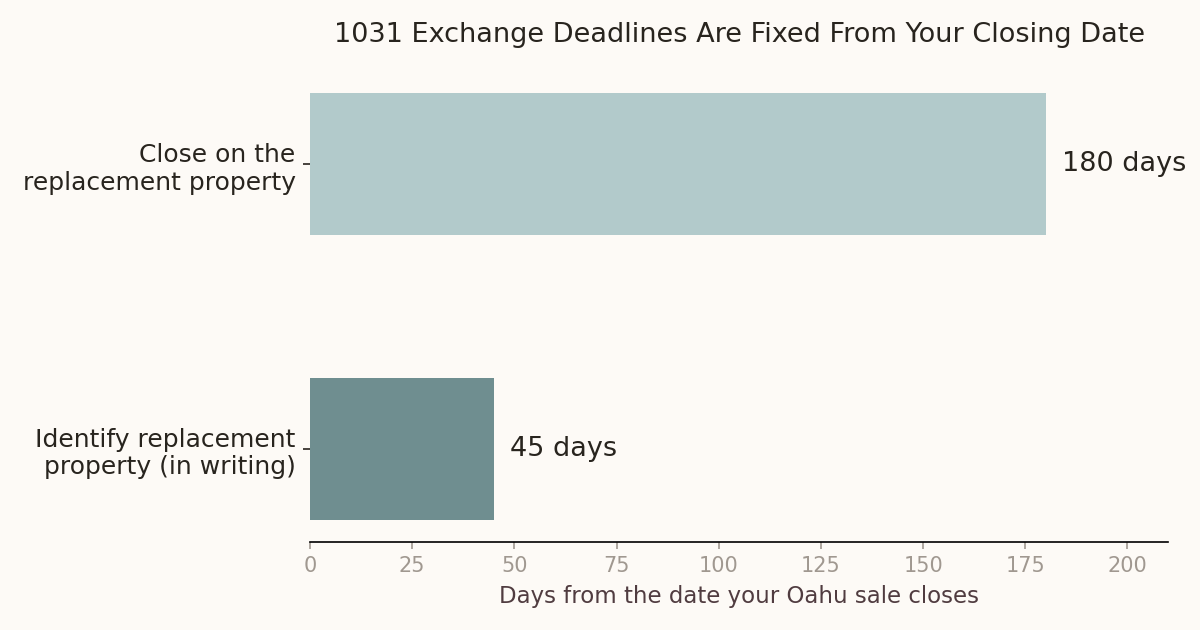
| Timeline pressure | None, sale closes on your terms | 45 days to identify a replacement property, 180 days to close |
| HARPTA withholding at closing | 7.25% of gross sale price withheld, refunded later if you overpaid | Can often be reduced with a withholding certificate filed in advance |
| What you end up with | Liquid cash, taxed | Equity rolled into a new property, tax deferred |
What this tells me as the numbers agent for Oahu sellers: the HARPTA withholding hits either way, so the exchange decision should be made on your tax and investment goals, not on avoiding the withholding.
Why this decision is bigger than the sale itself
Out-of-state owners selling an Oahu property, whether it is a rental, an inherited home, or a place they used to live, run into two systems at once: HARPTA withholding, which applies to every non-resident seller regardless of what they do with the proceeds, and capital gains tax, which a 1031 exchange can defer if you are willing to keep the money in real estate.
HARPTA is not optional and it is not a penalty. Hawaii withholds 7.25% of your gross sale price at closing because the state has no other way to collect from an owner who does not file a Hawaii tax return. If your actual tax liability is lower than what was withheld, you get the difference back when you file, but that can take months. A 1031 exchange does not remove this requirement, though there is a process to reduce the withholding in advance if you can show the exchange is genuinely underway at closing.
When an exchange makes sense, and when it doesn’t
A 1031 exchange makes the most sense when you want to stay invested in real estate, you have a reasonable idea of what you would buy next, and you can move fast enough to hit the 45-day identification window. It works less well when you are ready to be done being a landlord, when you need the cash for something else, or when you cannot realistically find and close on a replacement property in 180 days from a distance.
There is also a cost to running an exchange: a qualified intermediary is required by law to hold the funds between the sale and the purchase, and that adds fees and coordination on top of a transaction that is already happening from out of state. For some owners, paying the capital gains tax and being done with it is worth more than the deferral.
None of this is legal or tax advice, and the right call depends on your specific gain, your other holdings, and your plans. This is exactly the kind of decision I tell every out-of-state seller to run past their own CPA before listing, not after an offer is already on the table, because the exchange clock starts the day your sale closes.
What to line up before you list
If a 1031 exchange is even a possibility, talk to a qualified intermediary and your CPA before you list, not during escrow. They can tell you whether your numbers make the exchange worth the complexity, and they can get the paperwork in place to potentially reduce HARPTA withholding at closing instead of waiting on a refund.
Frequently Asked Questions
Does a 1031 exchange get me out of HARPTA withholding entirely?
Not automatically. It can reduce the amount withheld if you file the right paperwork with the state before closing, but you need a tax professional to set this up correctly.
How long do I have to complete a 1031 exchange?
You have 45 days from your closing date to identify replacement properties in writing, and 180 days total to close on the replacement. Both deadlines are strict and generally not extended.
Can I do a 1031 exchange on a home I lived in myself?
Generally no. 1031 exchanges apply to investment or business-use property, not a primary residence. A CPA can walk you through how your specific property qualifies.
Every situation is different, and the only way to know for sure is to run the numbers with someone who knows this market. Want to see what homes near you actually sold for, including the seller credits Zillow can’t see? Get the free monthly report at islandlivingoahu.com/sold-report.