
Quick Answer
What does being a personal representative in a Hawaii probate case actually require you to do?
A Hawaii personal representative, the state’s term for what other states call an executor or administrator, has a legal fiduciary duty to inventory and protect estate assets, pay valid debts and taxes, follow the will or Hawaii’s intestacy law if there is none, and keep beneficiaries reasonably informed. This includes filing an inventory of estate property within three months of appointment, and it can include personal liability if estate property, like a home, is left unprotected and loses value as a result.
By Aksana Tupalskaya | September 1, 2026
Being named personal representative can feel like an honor and a burden at the same time, especially when it comes with real legal responsibilities that were probably not explained in detail when you agreed to take it on. Here is what the role actually requires under Hawaii law.
The core fiduciary duty
A personal representative acts as a fiduciary, which means you are legally required to act in the best interest of the estate and its beneficiaries, not your own interest, even if you are also a beneficiary yourself. This duty covers everything from how you manage estate funds to how you handle estate property, including a home that may sit vacant for months during the process.
The three-month inventory deadline
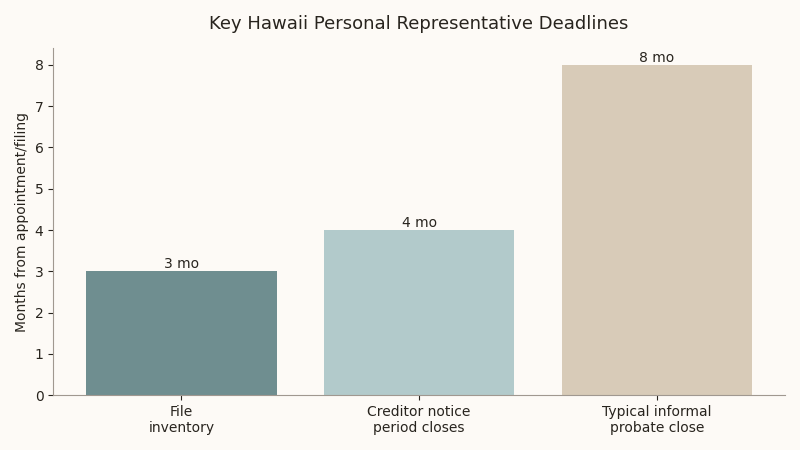
Under Hawaii Revised Statutes Section 560:3-706, a personal representative must prepare and file, or mail to interested parties, an inventory of the decedent’s property within three months of being appointed. That inventory has to list each item with reasonable detail and include its fair market value as of the date of death, along with any liens or debts against it. This is not a soft deadline, and it is also the document that often establishes the stepped-up basis heirs later rely on for tax purposes when they sell inherited property.
Paying debts and taxes before distributing anything
Hawaii law requires a notice to creditors, giving them four months from the date of first publication to present any claims against the estate. A personal representative generally needs to resolve valid debts and file any required tax returns before distributing the remaining assets to beneficiaries. Distributing property too early, before this process is complete, can create personal liability if a valid claim surfaces afterward and there is nothing left to pay it.
Protecting estate property, including real estate
This is the duty most directly connected to an inherited home. If a house sits vacant during probate, the personal representative is generally responsible for keeping it insured, maintained, and secure. Letting insurance lapse, ignoring a maintenance issue that causes damage, or failing to secure the property against a break-in can expose the personal representative to a claim from beneficiaries for the resulting loss in value. This is exactly why the earlier steps around vacant-home insurance and basic upkeep are not optional details, they are part of the legal role itself.
| Duty | Hawaii Reference | Deadline or Standard |
|---|---|---|
| File estate inventory with date-of-death values | HRS 560:3-706 | Within 3 months of appointment |
| Publish and process creditor notice | HRS 560:3-801 | 4-month claim window from first publication |
| Act in the estate’s best interest, not your own | General fiduciary duty under HRS 560 | Ongoing, for the life of the administration |
| Protect and maintain estate property | General fiduciary duty under HRS 560 | Ongoing, until distribution or sale |
What this tells me as the numbers agent for Oahu sellers: the personal representative role has real teeth, which is exactly why lining up a probate attorney and staying current on insurance and upkeep on any estate real property is not extra caution, it is the job.
Can you be compensated for this?
Yes. Hawaii law allows a personal representative reasonable compensation for their services, and many personal representatives who are also beneficiaries choose to waive it, though that is a personal decision, not a requirement. If the role is consuming significant time, discuss reasonable compensation with your probate attorney rather than assuming it is not an option.
Frequently Asked Questions
Can I resign as personal representative if the responsibility becomes too much?
Yes, a personal representative can generally petition the court to resign, and the court will appoint a successor. This is a real option if the role becomes more than you can manage, and an attorney can walk you through the process.
What happens if I miss the three-month inventory deadline?
Missing the deadline does not necessarily end your appointment, but it can draw scrutiny from the court or from beneficiaries, and it is best avoided. If you are at risk of missing it, talk to your probate attorney as early as possible rather than waiting until after the deadline passes.
Am I personally liable for the estate’s debts?
Generally no, a personal representative is not personally liable for the decedent’s debts simply by serving in the role. Personal liability typically arises from mismanaging estate assets or breaching your fiduciary duty, not from the estate’s debts themselves.
Do I need a lawyer to serve as personal representative, or can I handle it myself?
Hawaii does not always require an attorney for every probate case, but given the deadlines, notice requirements, and potential liability involved, most personal representatives work with a probate attorney, particularly when real property like an Oahu home is part of the estate.
If you have been named personal representative of an estate that includes an Oahu home and you are not sure what happens next, that is a normal place to be, and it is worth talking through with people who handle this regularly. Book a free 20-minute strategy call here, or start with what happens first when you inherit a house from the mainland here.