

If your condo association has struggled with hurricane insurance since 2023, you have likely heard something about a new relief fund. The details matter more than the headline, because this program helps a specific kind of building, not every condo owner on Oahu.
Quick Answer
Does Hawaii’s condo insurance relief fund actually lower your premium?
It can, but only for a specific slice of condo buildings. The Hawaii Hurricane Relief Fund, created under Act 296, has issued 97 policies covering roughly $2.6 billion in insured value, with some individual associations reporting up to 70 percent savings on the hurricane layer of their policy specifically. The fund targets larger associations previously turned down by two or more private carriers, so it does not mean every condo owner’s total premium has dropped, and some owners statewide are still seeing overall premiums rise or facing non-renewal.
By Aksana Tupalskaya | September 12, 2026
| Metric | Figure | Source |
|---|---|---|
| Policies issued under HHRF | 97 | DCCA Hawaii release, 2026 |
| Total insured value covered | ~$2.6 billion | DCCA Hawaii release, 2026 |
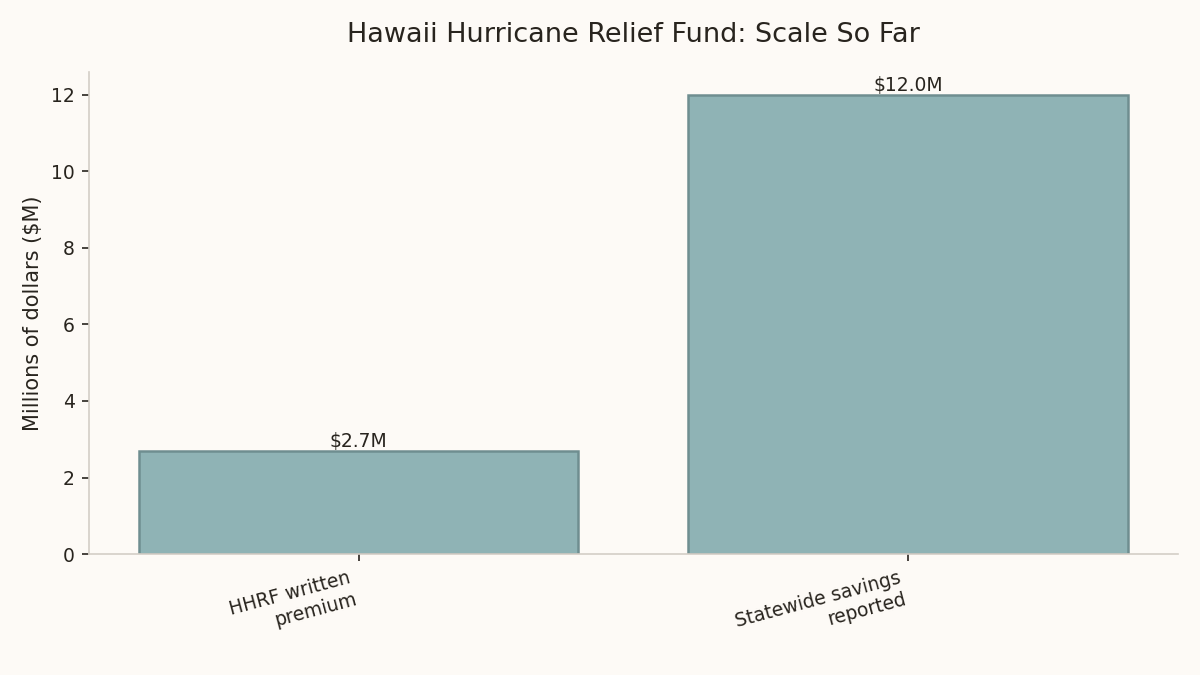
| Written premium under the fund | ~$2.7 million | beinsure.com, 2026 |
| Individual hurricane-layer savings reported | Up to 70% | DCCA / Governor’s office, 2026 |
| Total statewide savings cited | $12 million+ | DCCA / Governor’s office, 2026 |
What this tells me as the numbers agent for Oahu condo owners: real relief exists, but it is scoped narrowly enough that “ask your board if you’ve applied” is a far more useful sentence than “your premium will drop.”
What the Hawaii Hurricane Relief Fund actually is
Act 296, passed in 2025, reactivated a state-backed hurricane relief mechanism aimed at large condo associations that could not find affordable hurricane coverage in the private market. As of the most recent reporting, the fund has issued 97 policies, covering roughly $2.6 billion in total insured value, with about $2.7 million in written premium collected under the program.
Individual associations that qualified and enrolled report savings of up to 70 percent, specifically on the hurricane layer of their policy. The state has cited more than $12 million in total statewide savings attributable to the program so far.
Who actually qualifies
This is the detail that gets lost in casual conversation about the fund. HHRF is built for larger associations, generally those with total insured value above roughly $10 million, that have already been turned down for hurricane coverage by two or more private carriers. It is not a general discount available to any condo owner who calls in.
A small building that has never been declined by a private carrier is unlikely to qualify under this specific program, even if its premiums have also risen sharply in recent years.
What it does not fix
This is the caution worth repeating to any board considering the program: HHRF addresses the hurricane layer of a large association’s coverage. It does not mean every condo owner’s total insurance bill has gone down. Separate reporting has documented owners statewide still seeing overall premiums rise by 50 percent or more, or facing non-renewal entirely, even as this program has helped some of their neighbors.
The honest framing for any board or owner: ask whether your specific association has applied and qualified, rather than assuming relief has already arrived across the board.
What to actually do with this information
If you sit on a condo association board, or you own a unit in a larger Oahu building that has struggled with hurricane coverage, the useful next step is a direct question at your next board meeting: has this association applied for HHRF, and if not, why not. If your building has already been turned down by multiple private carriers, you may be exactly the kind of association this fund was built for.
This is general information, not insurance advice for your specific policy or association. I am not an insurance agent; a licensed broker familiar with HHRF eligibility can confirm whether your building qualifies.
Frequently Asked Questions
Does HHRF apply to individual condo owners, or only to the association as a whole?
The program applies at the association level, through the AOAO’s master policy, not to individual unit owners’ personal HO-6 policies.
What size of building typically qualifies?
The program generally targets larger associations, commonly those with total insured value above roughly $10 million, that have already been declined hurricane coverage by two or more private carriers.
If my building qualifies, will my HOA dues go down?
Possibly, if hurricane coverage was a significant driver of your association’s insurance costs and your board passes the savings through. This depends on your association’s specific budget and is not something this post can state for any individual building.
Is this the same as my individual condo owner’s HO-6 policy?
No. HO-6 policies cover an individual owner’s interior and personal property and are separate from the association’s master policy that HHRF addresses.
Worth raising at your next board meeting
If your Oahu condo association has been declined hurricane coverage by more than one private carrier, this is worth a direct question to your board this month. This is not insurance advice for your specific building; confirm eligibility with a broker familiar with HHRF.
The relief fund is one piece of the ownership cost picture on Oahu. The 2026 flood map changes are another, and I covered what they mean for owners in FEMA Redrew Oahu’s Flood Zones in 2026. If you own an Oahu condo and are weighing whether to hold or sell, the monthly sold report shows what units actually closed for after seller credits: get it free here.



